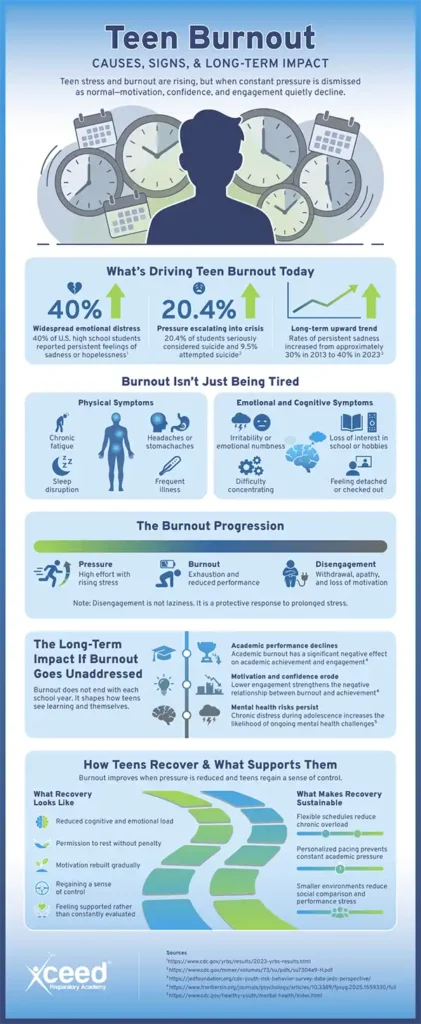
Teen burnout is often mistaken for a lack of motivation, but it is usually a sign that something in a student’s environment is out of balance. It reflects a mismatch between what is being asked of a student and what they are able to sustain over time. When that gap grows, stress shifts from being a motivator to a barrier.
For many students, school demands go beyond coursework. Packed schedules, frequent testing, social expectations, and limited flexibility can create constant pressure. When everything feels urgent and performance is closely measured, it becomes difficult for students to find space to recover. Even those who are highly motivated can begin to feel overwhelmed.
How Burnout Shows Up
Burnout does not look the same for everyone. Some students may become visibly frustrated or fatigued, while others withdraw or disengage more quietly. These changes can be easy to overlook or misinterpret as typical behavior. Over time, though, ongoing stress can affect how students approach learning. Interest may decline, confidence may drop, and effort may no longer feel effective.
These shifts are not a reflection of ability. They are often a response to sustained pressure without enough support or flexibility.
The Role of Learning Environments
Structured school models can contribute to burnout when they leave little room for individual differences. Students learn at different paces and respond to pressure in different ways. When systems are rigid, students may struggle to keep up or feel disconnected from the material.
More flexible learning environments, like a private school, can help restore balance. When students have some control over pacing, workload, or how they demonstrate understanding, they are better able to manage stress. Personalized approaches, including smaller class settings or blended learning options, can provide the support and adaptability many students need.
Finding Balance Without Lowering Standards
Addressing burnout does not mean reducing expectations. It means creating conditions where students can meet those expectations in a sustainable way. Opportunities to rest, ask for help, and adjust pacing can make a meaningful difference.
Supportive environments recognize that progress is not always steady. When students feel understood and supported, they are more likely to rebuild confidence and reconnect with their learning.
Burnout is not a failure on the part of the student. It is a signal that something needs to change. When educators and families respond thoughtfully, they can create learning experiences that challenge students while also supporting their well-being.